How to Charge for Content with x402 in EmDash
EmDash’s built-in x402 support points toward a pay-per-access web where publishers can charge for content without building a custom billing stack first.
Most publishing business models on the web were built for human pageviews, subscriptions, and ad inventory. That model gets shakier when more requests are made by agents, automations, and software acting on behalf of users.
That is why x402 is a genuinely interesting part of the EmDash story.
Why x402 matters
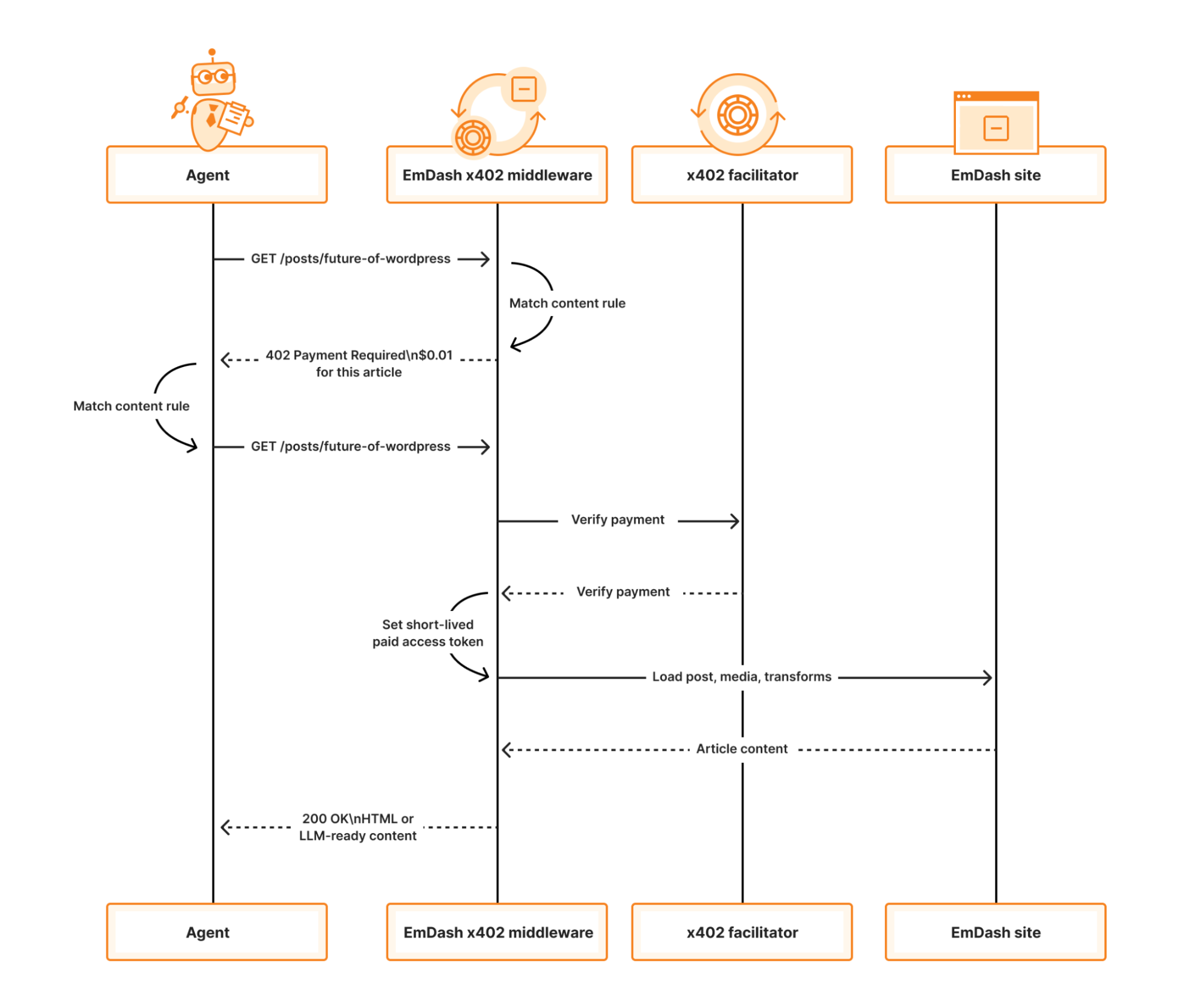
The basic idea is straightforward: a client requests access, the server can respond with 402 Payment Required, and the client can pay on demand for the resource it wants.
For publishers, that opens a different path from the usual paywall patterns.
Instead of forcing everything into monthly subscriptions, you can think in terms of:
- pay-per-access
- machine-to-machine requests
- agent-driven retrieval
- paid access without a huge custom commerce buildout
That is useful even before the rest of the web fully catches up, because it gives content businesses more flexibility than “ads or subscriptions” as the only serious options.
Why this is a good fit for EmDash
EmDash is already positioned as a CMS for modern infrastructure, programmable workflows, and agent-friendly operations. Built-in x402 support fits that positioning much better than bolting billing logic on at the very end.
It suggests a publishing model where monetization is part of content delivery design rather than an external afterthought.
A practical way to think about it
If you are planning to use x402, do not start with every piece of content.
Start by identifying content that has one or more of these properties:
- high value
- low casual browsing demand
- clear machine utility
- strong niche audience intent
That might include research, premium data, structured editorial feeds, niche archives, or agent-consumable resources where each request has obvious utility.
What publishers should avoid
Do not treat x402 as a magic replacement for all existing business models.
It is better to think of it as a new distribution and payment primitive. Some content will still work best as free marketing. Some will still justify subscriptions. Some will become more valuable when individual requests can pay for themselves.
That mix matters.
Why this topic deserves attention
The publishing industry has spent years optimizing around the browser session. x402 is one of the clearer signs that the request itself may become the monetizable unit.
That is why EmDash having this built in is more than a novelty feature. It points toward a different way of packaging content value for the next generation of clients.